Marketing Strategy 2026: Four Honest Bets From Inside the Daily Work
Marketing strategy 2026 from a practitioner with skin in the game: what actually changed, which hyped channels to skip, what to prepare, and the four bets I am making on a small budget.

Search for marketing strategy 2026 and you will meet the same genre on every result: the trend list. Ten predictions, five shifts, the year of whatever the author sells. Those lists come from platforms that profit from the trends and agencies that bill you for keeping up. I write from a different chair. I run marketing every day, as Head of Marketing for SSI Schäfer in Switzerland on one machine, and as a consultant with my own name on the invoice on the other. I have worked with AI in production for two and a half years. This is what 2026 actually looks like from inside the work, with a small budget attached to every opinion.
One disclaimer first, because honesty is the whole angle. I do not know what December holds. Nobody does, and the people who claim otherwise are selling a webinar. What I can give you is my filter: what I ignored this year and why, what I am preparing while others watch, and the four bets I have time and money on for the end of 2026. They are bets, not forecasts, and I will tell you what would make me fold each one. If you want the tool level of how I run AI through marketing daily, I wrote that account here, and the AI marketing pillar page holds the full map.

Key Takeaways
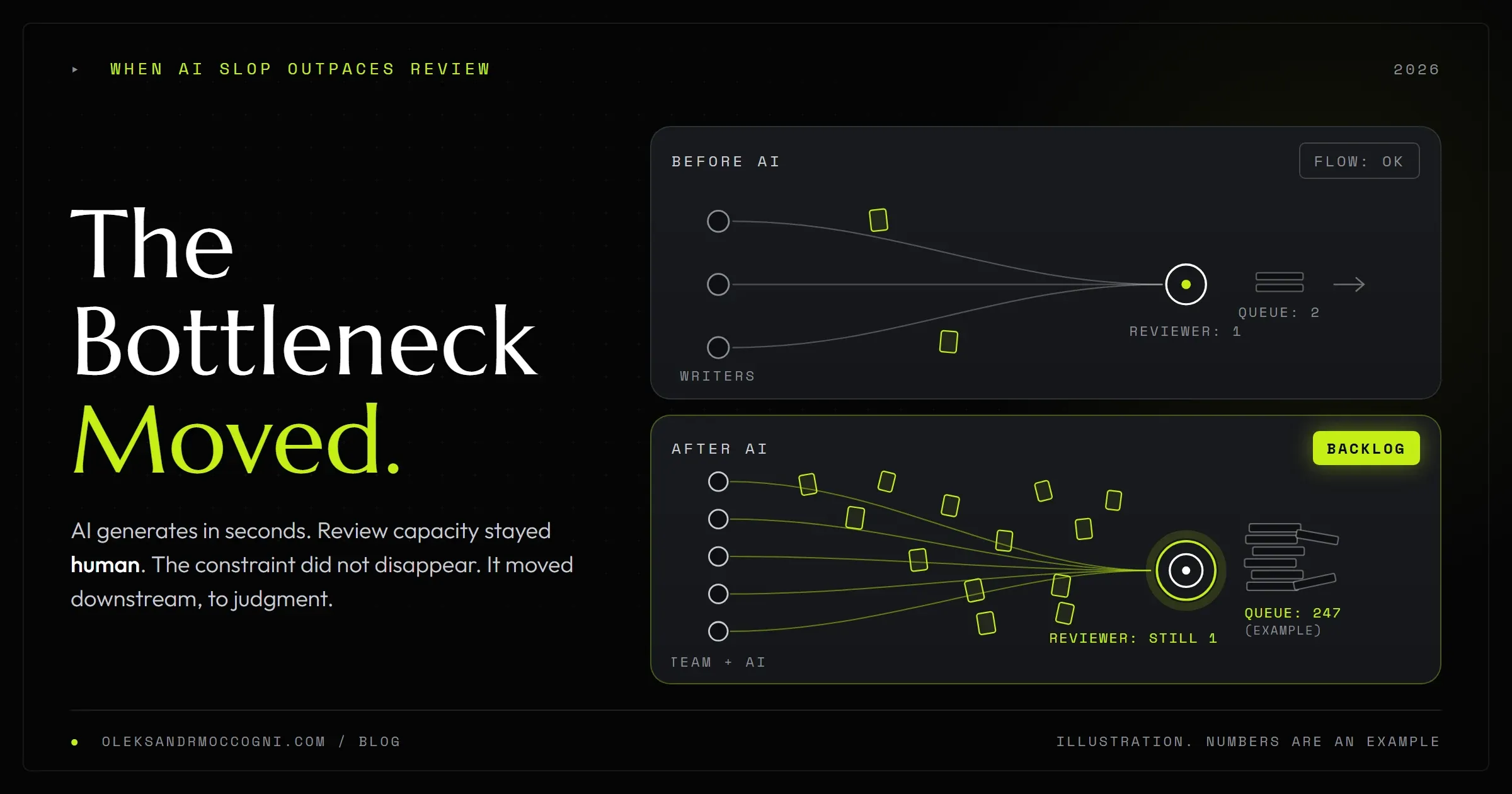
- The AI Overview is still absent from many niche SERPs. I pull raw SERP data through an API for keyword work, and the pattern repeats week after week. Where others assume the machines have taken over, the generative engine optimization window is open.
- Most new channels deserve a no, for now. When ChatGPT Ads opened self-serve in August 2026 I evaluated it for a B2B client and passed. Targeting is contextual and geo only, and a meaningful B2B test runs 5,000 to 10,000 USD a month.
- Model news matters less than process. With the frontier slowdown debate and open-weight models competing with the commercial top tier, the advantage moved from waiting for the next model to the workflow around it.
- Vibe coding went mainstream. A marketer who ships internal tools alone is no longer a curiosity, and that changes what a strategy builds instead of buys.
- Citable content beats predicting the click. Nobody knows if AI Overviews eat clicks. Content the machines cite wins in both futures.
- The real budget line is attention. My tool stack costs about 200 a month. The scarce resource is the attention to review, measure and think.
What Actually Changed in 2026
The loudest voices say everything changed. From inside the work, I count four changes that matter, and none of them is the one the trend lists lead with.
First, search results are in flux but unevenly. Because my keyword research runs through an API, I look at raw SERP data constantly, not at screenshots someone chose for me. On many niche terms, especially in B2B, there is no AI Overview at all. The rollout that was supposed to kill the click has not arrived everywhere, and the gap between the narrative and the reality is itself a strategic fact.

Second, new ad surfaces opened. ChatGPT went self-serve with ads in August 2026, and every marketer I know asked the same question in the same week. My answer, with the math, comes below.
Third, the cost of intelligence dropped again. Open-weight models now compete with the top commercial ones on real work, not on demos. I wrote about the open model I run when I do not want to pay the premium tier, and that option changed how I budget.
Fourth, building software stopped being a developer monopoly. Vibe coding went mainstream, and a marketer with no dev team now ships internal tools routinely. Each of these changes hits a small budget differently, and none of them is solved by buying more tools.
The Hype Filter: Why I Said No to ChatGPT Ads, for Now
When ChatGPT Ads opened to self-serve in August 2026, a B2B client asked whether to be first. I did the homework instead of the trend reaction, and the homework said no.
The targeting, at launch, is contextual and geographic. You place your message near conversations about a topic, in the markets you choose. That can work for broad consumer offers. For a niche B2B audience, contextual plus geo means paying to learn, and to gather signal above the noise a meaningful test runs 5,000 to 10,000 USD a month. Below that floor you are not testing. You are donating.
My client’s budget is real and small, so the honest recommendation was no, and it was accepted. Notice what that no is not. It is not a forever no, and it is not contempt for the channel. I keep a revisit file: when targeting narrows toward audience or intent, when auction prices settle, when comparable B2B cases exist, we look again.
The rule behind the decision is my hype filter for every new channel. A channel earns budget only when targeting and measurement both meet the bar my money demands. Reading, asking, watching case data cost nothing. Spending is a separate decision, made slower.
The GEO Window: Citable Content Where the AI Overview Has Not Landed
Here is the observation most of the market misses, because most of the market does not look at raw SERPs. On many niche SERPs I track, the AI Overview is simply not there. The panic narrative says optimize for AI search or die. The data says the rollout is patchy, niche by niche, and often absent exactly where smaller players live.
You can read that two ways. The pessimist reads a countdown: it is coming, clicks will die, why invest. I read a window. While the AI Overview is absent, classic ranking still works, so content published now earns traffic the traditional way. When it arrives, the sources that get cited will be the ones that spent the quiet months becoming citable. I wrote the full mechanics of generative engine optimization here.

The honest version, which anchors everything else: nobody knows whether the AI Overview eats the click. I do not know. You do not. Anyone who claims otherwise is extrapolating from one niche they happen to watch. So I refuse to build a strategy that only pays if one outcome wins. Citable content is the bet that wins either way: if machines answer, they cite you; if humans keep clicking, you rank and they land on the source. In practice, citable means claims a machine can quote without rewriting, numbers with a source, passages that stand alone, consistent naming for what you do. That is preparation, not prediction.
Vibe Coding Went Mainstream: What the One Person Team Ships Now
In 2025 a marketer shipping software without a developer was a conference story. In 2026 it is a Tuesday. Vibe coding, describing tools in plain language and reviewing what the model writes, crossed from early adopters to ordinary marketing teams this year.
I crossed it myself. I have shipped four internal tools with no dev team: a task dashboard, a lead attribution kit, a content ingestion service, and a 900 page directory site. The full method is in my vibe coding guide. What matters here is the strategic consequence: the build, buy or wait calculation changed. Half the small tools a marketing team used to wait for can now be built in an evening and reviewed over coffee.
That does not mean the judgment left the room. Everything I ship passes gates: review before deploy, no credentials in code, no client data in public models, tests on anything that touches real data. Mainstreaming made output cheap. The gates make it trustworthy, and what you choose to automate first still decides whether it helps or bites.

Model News Matters Less Than Process
Two model stories dominated the year, and both point the same direction. The frontier labs are openly debating a slowdown, and I wrote about what the GPT-6 wait actually means. Meanwhile the open-weight tier closed most of the gap on the commercial leaders.
Together those stories kill the most expensive habit in marketing right now: waiting for the next model to solve the strategy. If frontier progress is slowing and the open tier is already good enough for real work, the difference between you and the competitor is not which model you subscribe to. It is the process around the model: how you brief, how you review, how you measure, how fast you ship. That is why my playbook for this year is built on what actually works in daily practice, not on model releases. Tools rotate. The workflow survives them.
My Four Bets for the End of 2026
Here is the part where I put my name on something checkable. Four bets, each with a horizon past December, each with a reason and a fold condition. This is what I do instead of chasing rumors.
Bet one: compounding content, published multilingual. Every article I publish exists in every language the site serves, with internal links between them, and every language gets its own keyword research instead of a translation of the English keyword. Compounding is the only curve a small budget can ride. A viral spike is rented. A cluster of interlinked articles in several languages is owned, and it keeps paying while I sleep. Fold condition: if compounding stops showing up in first-touch data after two quarters, I cut the weakest language, not the principle.
Bet two: citable content on SERPs where the AI Overview has not landed. The window from the earlier section is the whole bet. I am becoming the source the machines learn to quote while most of the competition is either panicking or ignoring the space. Fold condition: if the Overview rolls out across my niches and citations bring nothing measurable by mid 2027, the bet converts into classic brand work. The content survives either way.
Bet three: systems with gates instead of headcount. First-touch attribution wired into every landing page before launch, QA gates in every content pipeline, tests on everything that touches data. One person plus gates scales. One person plus chaos does not. Fold condition: none. This is the closest thing to a no-lose bet on the list, because the gates pay out in quality even if every other prediction fails.
Bet four: attention as the budget. My tool stack costs about 200 a month, and I keep it there on purpose. Tool access stopped being an advantage when everyone got it. Attention is the constraint now: the review time, the measurement discipline, the thinking that decides what to ignore. Every tool I do not add buys back attention I can spend on this list. Fold condition: if a tool demonstrably returns more attention than it consumes, it enters. That test refuses almost everything.
How I Measure: First-Touch Truth on a Small Budget
Bets need a scoreboard. Mine is first-touch attribution, wired properly, not the last-click story that flatters retargeting and hides everything that compounds. When a lead arrives I want to know where the journey actually started, because that is where the budget decision lives. Compounding content looks weak in last-click dashboards and strong in first-touch ones, and that difference decides whether bet one lives or dies.
The discipline is boring on purpose. Every franc has a job. Every channel gets one question: did this start journeys or finish them? The tools cost about 200 a month. The measurement costs attention, which is exactly the resource I protect by not chasing every new channel.

The Honest Version of Marketing Strategy 2026
Here is my marketing strategy 2026, plainly. I ignore most new channels, with a written reason and a revisit condition for each no. I prepare citable content where the machines have not arrived yet, in every language I serve. I build systems with gates, because one person with gates beats a team with chaos. I keep the tool bill at 200 a month and spend the real budget, attention, where it compounds.
None of this predicts the future. All of it survives most futures. That is the difference between a trend list and a strategy, and it is the only difference I care about.
Frequently Asked Questions
What is the biggest marketing trend for 2026?
From inside the work, the trend that matters is not a channel. It is the shift of advantage from access to attention. Everyone has the models, the ad platforms, the automation. Almost nobody has the attention budget to use them well. Worth acting on alongside it: the uneven AI search rollout, open-weight models good enough for production, and vibe coding going mainstream for marketers.
Should a small B2B team try ChatGPT Ads in 2026?
Not with a small budget. Targeting at self-serve launch is contextual and geographic, so a niche B2B audience means paying to learn, and a meaningful test runs 5,000 to 10,000 USD a month. Below that floor the data is noise. Watch the channel, keep a revisit file, and spend the money on compounding content until targeting narrows.
How do I build a marketing strategy 2026 plan on a small budget?
If you want a marketing strategy 2026 checklist you can run this week, here is mine. Pick a few bets with a horizon and write down what would make you fold them. Publish compounding content in every language you serve, with its own keyword research per language. Make it citable for machines where the AI Overview has not landed yet. Wire first-touch attribution before you spend on anything. Keep the tool stack around 200 a month, because attention, not tool access, is the resource that decides who wins.