Marketing Budget 2026: How to Allocate It When AI Made Production Nearly Free
How to build a marketing budget in 2026 when AI made production nearly free and review expensive. Phased allocation, what to cut first, and the paid guardrails I refuse to break.

Search for marketing budget advice and you will find percentages of revenue and templates to copy. Spend this share on brand, that share on paid, keep a reserve for experiments. Those guides were written for a world where producing marketing assets was the expensive part. That world is gone, and a budget built for it puts money on the wrong lines.
I am a marketer who has worked with AI every day for two and a half years. I run marketing for my employer, I consult on the side, and I build my own projects. My AI subscription costs about 200 a month for heavy use. A complete keyword research run through an API costs about $0.32 in calls. An image in my generation pipeline costs about 6.5 credits. Those numbers changed the shape of my budget more than any percentage rule ever did.
This is how I actually think about a marketing budget in 2026, written for small businesses and one-person teams. The three phases I allocate by, what I cut first, the guardrails I refuse to break around paid spend, and the line item no template ever includes: review hours.
Key Takeaways
- The percentage-of-revenue rule stopped being useful. Not because revenue stopped mattering, but because AI collapsed the cost of production and made attention the scarce resource.
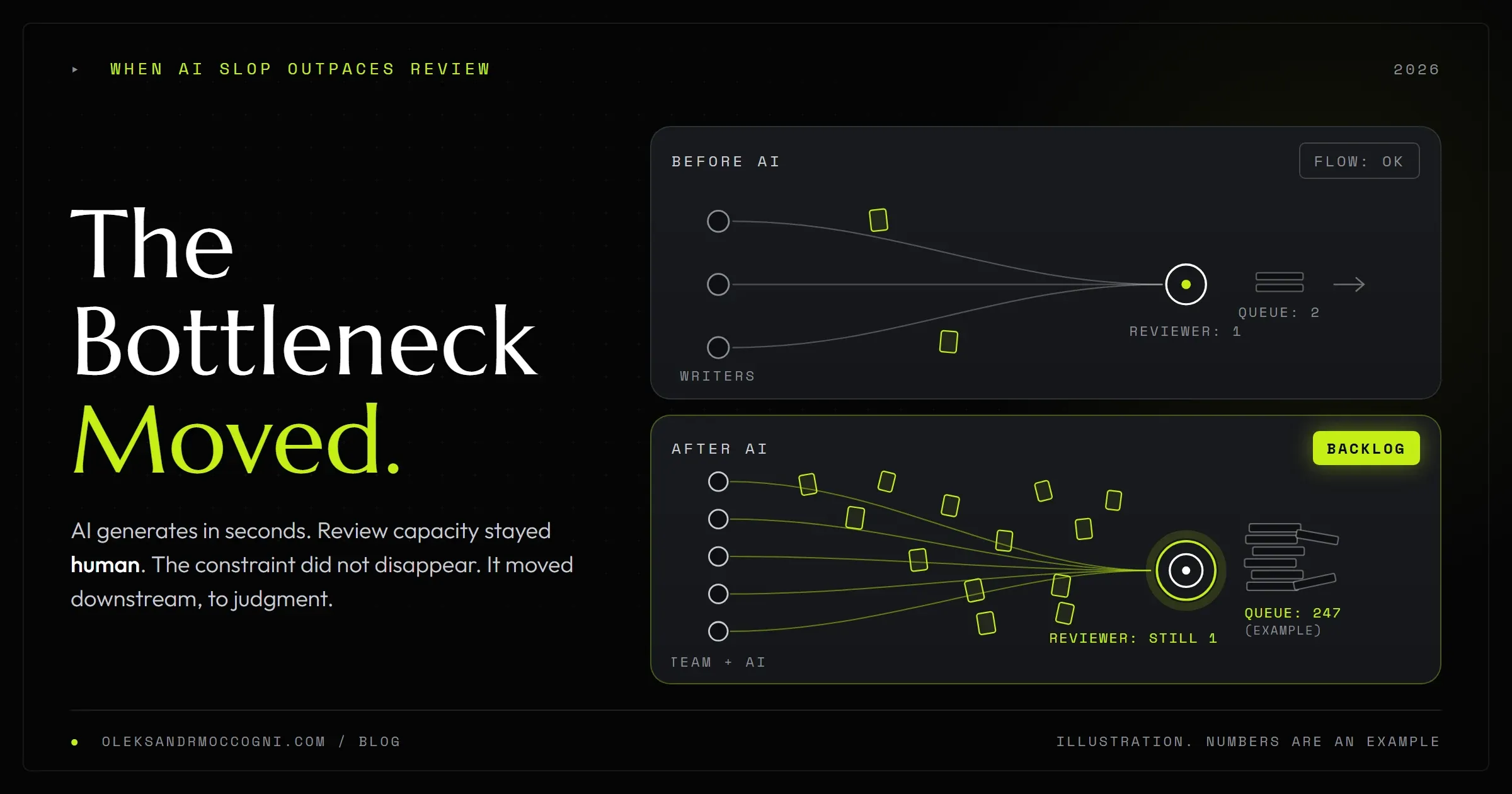
- Production is nearly free. Review is not. A full keyword research run costs about $0.32 in API calls and an image costs about 6.5 credits. The hours needed to check that output did not get cheaper.
- Allocate by phase, not by percentage. Test with the cheapest tools that produce real assets, scale only what shows evidence, sustain what compounds.
- Content and tools come first, paid comes second. Small recurring costs that compound beat big one-off spends, and paid only enters the budget when attribution works.
- No paid spend without an explicit GO. A guard threshold of 200 EUR per month per client and a triple check before anything scales. Reading data and reporting is always free.
- The most expensive line in my budget is review attention. Not the subscription, not the tools. The person checking the output.
Why the Percentage-of-Revenue Rule Stopped Working
Open the top results for budget advice and count what you find. Templates. Allocation examples to copy. The same paragraph about spending a single-digit share of revenue, adjusted by industry, repeated under different logos. The advice is not exactly wrong. It is a proxy. It answers the question “how much can we afford to lose while we learn what works”, and it made sense when learning was expensive, because producing the assets to learn with was expensive.
AI broke that proxy on the cost side. When a complete keyword research run costs about $0.32 in API calls, learning what works is no longer the expensive part of marketing. You can test five angles on a topic for the price of one lunch. The expensive part moved. It is now the attention that decides which of those five angles deserves to exist, and the review that makes sure the winner is actually good.
For a small business the percentage rule has a second problem. A percentage of a small revenue was once a number too small to buy anything meaningful. Now it is a number far bigger than production needs, because production is nearly free. You are not allocating money against production anymore. You are allocating attention, and the money follows the attention.
If you want the strategy layer above all of this, I keep the pillar in my AI marketing guide. The rest of this article is the money layer underneath it.

What AI Actually Changed: Production Nearly Free, Attention Expensive
Here are my real numbers, so this does not stay abstract. My AI subscription runs about 200 a month for heavy use. A power user pushing every tool to its limit sits somewhere between 400 and 600. A full keyword research run through an API costs about $0.32 in calls. An image in my generation pipeline costs about 6.5 credits on a creator plan. Static hosting for a content site costs close to nothing.
Now look at what did not get cheaper. Deciding what is worth publishing. Checking that the facts in a draft are true. Protecting a brand voice when a model can imitate anyone. Reading the output carefully enough to sign your name under it. None of that got faster for free, because none of it is production. It is judgment, and judgment is still paid in human hours.
That asymmetry is the entire budget story of 2026. Production scales for nearly nothing. Review scales linearly with volume, and it is paid in the most expensive currency a one-person team has: attention. I wrote the full accounting of two and a half years of daily AI use elsewhere. The budget consequence fits in one sentence. Your production is no longer capped by your tools. It is capped by your capacity to review what the tools produce.

Allocate by Phase: Test, Scale, Sustain
Percentages tell you how to split a pile of money. Phases tell you what the money is for. I allocate in three phases, and each one has a different cheapest useful move.
Test. The goal is evidence, not polish. Use the cheapest tools that still produce real assets: the AI subscription, free analytics, organic content, manual outreach. The budget here is small recurring costs, not campaign money. If three pieces on a topic do nothing, the topic dies. The budget line survives and moves to the next test.
Scale. Only what showed evidence gets money. This is where paid enters, and only when attribution works. If you cannot say where a lead came from, paid spend is a donation to the platform. Know what a customer actually costs you before you scale spend, because a working customer acquisition cost number is the difference between scaling and gambling.
Sustain. What compounds stays. Content that keeps ranking, the list that keeps growing, the tools that save hours every week. The mechanical parts get automated. The budget flattens into mostly recurring lines plus selective paid on the two or three channels that provably work.
The phase model also answers the timing question the templates skip. Money moves between phases on evidence, not on calendar quarters.

What to Cut First
Every budget I audit has the same four cuts available, in this order.
Duplicate tools. Two tools doing the same job, both on annual plans. Run a quarterly stack review and keep the one you actually open. I keep the stack I really run documented, and it is shorter than people expect, on purpose.
Agencies doing mechanical work. Volume drafts, resizing, basic research, bulk reporting. That layer of the work is now a subscription. Keep agencies for what a subscription cannot do: strategy, taste, accountability. Stop paying agency rates for mechanical output.
One-off spends before attribution exists. The second website redesign, the printed brochure nobody measures, the booth with no follow-up plan. If you cannot trace the result, it was not a spend, it was a ritual.
Paid channels you cannot attribute. Not underperforming channels, unattributed ones. Underperforming can be fixed. Unattributed cannot even be discussed.
The rule behind all four: if you cannot point at the output, cut it. Production being cheap makes this easier, not harder, because the things worth keeping now cost less than they used to.

Paid Media: The Rules I Refuse to Break
Client money is a different category of money, and it deserves rules that do not bend. In my work, paid spend on client accounts never happens without an explicit GO. Not a nod in a call, not enthusiasm in a meeting. A GO.
The guard threshold is 200 EUR per month per client. Before anything scales past it, a triple check runs: current spend against plan, spend against the client cap, and the explicit confirmation. All three, every time. What is always free, and always proactive, is reading the data. Insights, reports, observations on the numbers. Reading costs nothing and builds the trust that makes the GO possible.
Why the hard line? Because paid is the only budget line that compounds against you while you sleep. A bad content piece costs you a few hours. An unattended campaign spends money every day. And because paid has one honest job in 2026: scaling what already works. It never funds discovery. Discovery is organic and content work now, and that work is nearly free. If an idea needs paid media to be tested, the idea was not ready.

The Most Expensive Line Is Not a Tool, It Is Review Hours
The subscription is visible. It arrives as an invoice, so it feels like the budget. The review hours are invisible. Nobody invoices you for the evening you spent checking that the twenty drafts the model produced were actually publishable.
Here is the mechanism nobody budgets for. Cheap production multiplies volume, and volume multiplies review load. The tools will happily produce ten times more than you can check, and unchecked output is worse than no output, because it ships with your name on it. I have seen what happens when teams treat model output as finished, and why AI marketing implementations fail is almost always this mistake at company scale.
So I budget by a rule instead of a template. Production is capped by review capacity, not by tool limits. If I cannot review it, I do not produce it. That single rule sets the real throughput of a one-person marketing operation in 2026, and it is the reason my tool budget stays small while my calendar is the line I protect.

What My One-Person Allocation Actually Looks Like
Content and tools first, paid after. That is the whole allocation, and here is what it means in practice.
The recurring core is small. My AI subscription runs about 200 a month for heavy use. The API lines are tiny: about $0.32 for a complete keyword research run, about 6.5 credits per image on a creator plan. When I need a tool that does not exist, I build it myself the way I vibe code, because a week of evenings beats a yearly license for something my workflow will outgrow.
The clearest example I own is a project of mine, an AI exhibitions directory. Static hosting costs nearly nothing. The entire real cost sits in two places: producing content that is worth listing and reviewing it before it goes live. Hundreds of exhibition pages would have been a serious budget line a few years ago. Today the only genuine cost is my attention deciding what is good enough to publish.
Paid comes after, and only where attribution already works. At my employer SSI Schäfer I run the corporate version of the same shape: strict internal AI guidelines, no frontier models for company data, and the same discipline around spend and review, at a different scale. The proportions differ. The logic does not.
The Budget That Compounds vs the Budget That Burns
Two kinds of lines exist in every budget. Lines that compound: content that keeps ranking, tools that save hours every week, a list that grows, skills that make the next piece cheaper. And lines that burn: untracked one-off campaigns, tools bought for a single project and forgotten, paid spend with no attribution story.
The discipline that tells them apart is measurement. Marketing ROI is not a report you produce at the end of the quarter. It is the habit of asking, before the money leaves, what this line returns and when. The compounding lines survive that question easily. The burning lines never survive it twice.
Here is the 2026 version of the budget conversation. Do not start from a percentage. Start from your hours: how much output you can honestly review, and which lines deserve that review. Fund content and tools first, because they are small, recurring, and they compound. Let paid in last, behind an explicit GO, with attribution already running. And audit yourself with one question every quarter: what did this line return, and can I point at it. Everything else is template decoration.
Frequently Asked Questions
How much should a small business spend on marketing in 2026?
Less than the templates imply and more deliberately. Start from the cheapest test that produces real assets, usually a subscription plus free analytics, and let evidence move the number up. The percentage of revenue is a ceiling for guidance at best, never a plan. The plan is: small recurring costs first, paid only behind attribution, and a hard review of every line each quarter.
Should AI tools be a separate line in the marketing budget?
No, and that is the point. Treat them as core infrastructure, the same line as hosting and email, because production runs on them the way it used to run on agencies and print shops. A heavy-use subscription runs about 200 a month and the API lines are fractions of that. What deserves its own line is not the tools. It is the review capacity that turns their output into something you would sign.
What is a realistic marketing budget for a one-person team?
A realistic marketing budget for a one-person team in 2026 is small in money and precise in shape: about 200 a month for a heavy-use AI subscription, pocket change for API calls like the $0.32 keyword research run, close to nothing for static hosting, and zero for paid until attribution works and someone gives an explicit GO. The expensive part is not in the spreadsheet. It is the review hours, and budgeting them honestly is what decides whether all that cheap production becomes an asset or a liability.