ChatGPT for Marketing: 7 Ugly Truths the Prompt Lists Won't Tell You
ChatGPT for marketing: seven ugly truths from 2.5 years of daily use. The hallucinations, the generic slop, the hidden bill, and where the tool truly pays off.

Search for ChatGPT for marketing and you will find prompt lists. Dozens of them. OpenAI publishes its own for free, and page after page of Google’s results republishes the same ones with fresh screenshots.
I’ve run real marketing through AI, daily, for two and a half years, on two computers, under two sets of rules. I’m not going to hand you the forty-first prompt list. I’m going to hand you what those pages leave out: what using ChatGPT for marketing costs you when you follow them.
Key Takeaways
- Prompts are free because they are common. OpenAI publishes the prompt lists itself. An advantage everyone owns is an advantage nobody owns
- It fabricates facts with total confidence. One invented statistic in a client deck ends careers, and the model won’t warn you
- It has never met your customers. It doesn’t know your analytics, your CRM, or why your buyers churn. A strategy it drafts is a summary of every marketing blog it ever read, and a summary has no positioning
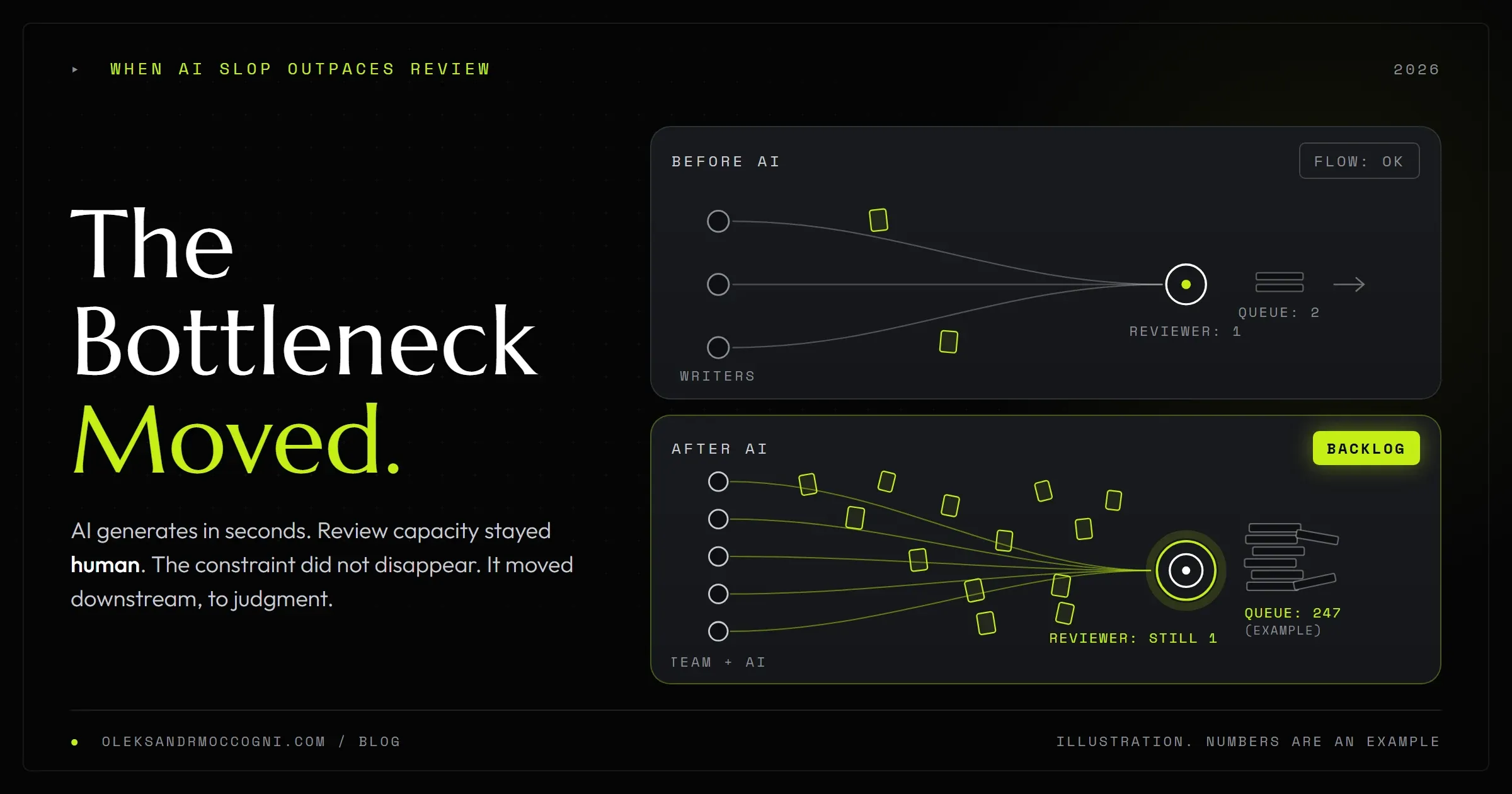
- The bottleneck moves. It doesn’t vanish. Drafts take seconds. Reviewing bad output takes longer than writing
- Publishing raw output adds you to the noise. AI Overviews already answer every generic question for free
- Whatever you paste in, you have leaked. Customer data in a consumer chat is a breach with a friendly interface
- The subscription is 20 euros. Heavy use runs about 200 a month, a hyper user 400 to 600. The expensive line is the competence of the person driving
1. The Prompt Lists Are Free Because They Are Worthless
OpenAI’s marketing academy hands out dozens of prompts: campaign briefs, ad variations, nurture sequences, content calendars. Every agency blog ranking for this keyword republishes a version of the same list. That is the first ugly truth, hiding in plain sight.
A prompt everyone owns is an advantage nobody owns. When a million marketers paste the same campaign brief template, the model converges on the same structure, the same hooks, the same three emotional angles. Threads across marketing subreddits repeat one complaint about the output: it sounds generic. Your brand voice dissolves into the average of everyone who bought the same subscription.
What separates practitioners from prompt collectors sits upstream of the prompt. It is the raw material: your customer’s exact words, your conversion data, the objections your sales team hears every day. The prompt is a recipe. Without ingredients, you are reheating the internet.
2. It Will Fabricate Facts, Calmly
Ask ChatGPT for market statistics and it will produce them. Beautiful ones. Round numbers, tidy growth rates, plausible source names. Some of them will not exist.
This isn’t a bug you outgrow with a better prompt. When I test whether someone can drive AI, one project exists precisely for this: produce a market analysis, then defend every number. That is where hallucinated confidence dies.

In marketing, numbers travel. A fabricated statistic rides from draft to deck to landing page to pitch, and nobody remembers whose prompt produced it. Everybody remembers who presented it. Verify every number against a primary source, or delete the number. There is no third option.
3. It Has Never Met Your Customers
ChatGPT knows what the internet says about your industry. It knows nothing about you. It hasn’t seen your analytics, your Search Console, your CRM, or the three emails your angry customers write.
So when you ask it for a strategy, it does the only thing it can: it averages every marketing blog in its training data. The result reads like a strategy and positions like nothing. Even Smart Insights, whose advice on this topic is otherwise sane, opens its own limitations list with the audience point. Further down, it adds your past campaigns and your internal politics to the same warning.
Strategy is choosing what not to do, based on evidence only you have. The machine can structure that choice. It can’t make it.
4. The Bottleneck Moves. It Does Not Disappear.
Here is the demo that sells the dream: a campaign draft in thirty seconds. Here is the invoice nobody shows you: forty minutes reading that draft, untangling the wrong structure, and hunting for what it invented while you were being impressed.
The bottleneck doesn’t vanish. It moves from writing to reviewing. Reviewing mediocre output is slower than writing from your own notes, because bad text occupies the slot where your idea should be.

The machine also obeys you literally at exactly the wrong moments, and it has no sense of what to fix first. I documented both failure modes with examples in the longer piece: the day “delete everything” meant delete everything, and why sequencing is architect work. The short version is that the machine does the typing. You still do the judgment, on every page.
5. Publishing Raw Output Is an SEO Own Goal
Since anyone can now produce unlimited competent content, competent content is worth nothing. That isn’t a moral judgment. It is supply and demand.
Google does not penalize text for being AI generated. It does something worse. It ignores text that says what ten thousand other pages already say, while AI Overviews answer the generic version of the question before the click happens. ChatGPT now answers with tools as well as text; I cover what that may mean for visibility in ChatGPT Intelligent UI.
If your page is the average of the internet, there is no reason to rank it. No reason to cite it, no reason to click it. The pages that still win share one trait: material only that author could have produced. Numbers from real deployments, screenshots of real dashboards, opinions that cost something to hold.
I wrote the full playbook on what still works here. The short version: generate the draft with the machine, then add the part the machine cannot.
6. Whatever You Paste In, You Have Leaked
My employer, a multinational, forbids frontier models for company data. That isn’t backwardness. No AI company today can guarantee, with 100 percent certainty, what happens to what you paste. A consumer chat that “remembers context” is remembering it somewhere.
Marketers paste the worst possible material: customer lists, unreleased product specs, pricing floors, whole CRM exports because the prompt asked for context. If you would not email that file to a stranger, don’t paste it into the chat of one.

This is also why local models matter. Frontier-class open models like GLM 5.3 are closing the quality gap, and a model running on your own metal never has to trust anyone’s privacy policy.
7. The Bill Is Not the Subscription
Twenty euros a month, says the pricing page. Then you add the second tool, the API usage, the image generation, the workflow platform. One day heavy use costs about 200 euros a month, and a hyper user pushing every tool to its limit lands between 400 and 600. I know because I run that stack. Here is the current one. For what AI images cost per article, see GPT Image 2 vs Nano Banana 2.1.
The subscription is still the cheap part. The expensive part is the competence of the person driving, because the same subscription produces a mediocre site or a production-grade one depending on who types. And competence erodes when you delegate everything and learn nothing: the skill that made you good at directing the machine is the one skill it doesn’t supply.
The meme says AI costs more than the staff it replaced. The truth is duller. Mediocre output has never been more replaceable, and good judgment has never been worth more.
Where ChatGPT for Marketing Earns Its Keep
This article is a counterweight, not a funeral. Used the right way, the tool is extraordinary, and I wouldn’t give it up.
Copywriting, with a hand on it. Guided paragraph by paragraph, the output comes out about ten times better than what I produce unaided. The guidance is the work.
Technical quality that stays put. Core Web Vitals on our WordPress installs hold steady, because “compress this and keep the vitals green” is an instruction anyone can follow now.
Meetings that close. A recording becomes a summary with an owner on every action in ten minutes. I still check every summary. It still earns the ten minutes.
A sparring partner. It finds the weak assumption inside the plan you were proud of, before any human does. That alone pays the subscription.
I documented all of it, with numbers and limits, in what two and a half years of daily use taught me. When companies ignore those limits, they fail in four depressingly repetitive ways, which I documented separately.
The Test I Give Instead of a Prompt List
When someone claims they can use ChatGPT for marketing, I skip the interview questions. I put three projects in front of them. Build a website and tell me what’s wrong with it. Produce a market analysis and defend every number. Then build anything you believe this company needs.
I’m not grading the output. The machine did the output. I’m grading whether they can see past what the machine handed them. That is the entire skill, and no prompt list teaches it.
So Should You Use ChatGPT for Marketing?
Yes. Daily, within the rules that apply to your data. But in this order: your data first, your judgment second, the machine third.
The prompt lists are free because they are common. The judgment is expensive because it’s yours. Anyone who tells you the order is reversed is selling a subscription, not a result.
One action before you close this tab: open your analytics, pull three real numbers, and make the next prompt about them. That habit is the whole difference between a practitioner and a prompt collector.
Frequently Asked Questions
Is ChatGPT good for marketing?
For drafts, variations, summaries, structure, and resistance against your own bad ideas, yes, clearly. For strategy from scratch, facts, numbers, and anything touching customer data, no. The value is decided by what you feed it and how hard you review the output.
Can Google penalize AI-generated marketing content?
Not for being AI generated. Pages get ignored for being interchangeable, whatever wrote them. The fix is material only you can produce: real numbers, real deployments, real opinions.
How much does ChatGPT for marketing cost?
The subscription is about 20 euros a month. Heavy use runs about 200 a month, and a hyper user pushing every tool to its limit lands between 400 and 600. The expensive part is not the software. It is the competence of the person driving it.